Standardized Interoperable Data Collection for Myositis Research: Developing Expert Consensus on Common Data Elements for Myositis Outcome Measures
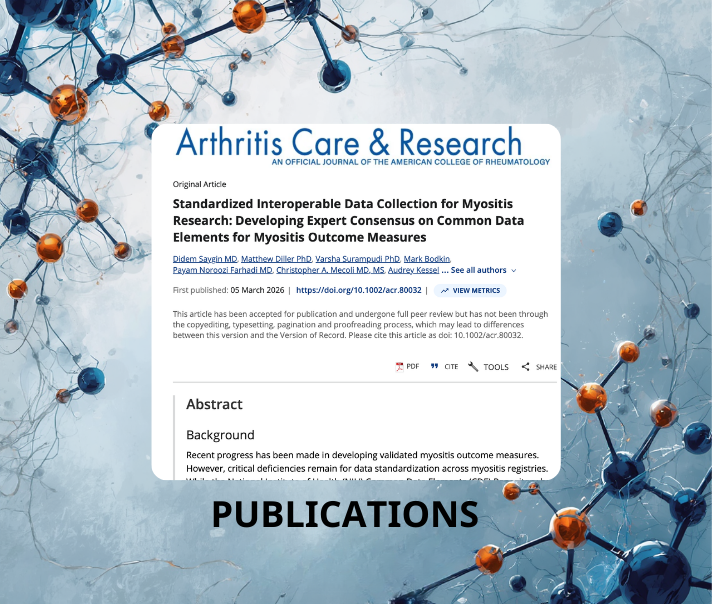
This study describes the development of Common Data Elements (CDEs) for myositis—standardized data definitions designed to improve how researchers collect, compare, and share information across studies.
Although significant progress has been made in outcome measures for myositis, the field still faces major challenges due to lack of standardization and fragmented datasets. This is particularly important in rare and heterogeneous diseases like myositis, where individual studies often include small patient populations.
What are CDEs and why do they matter?
CDEs provide:
- A common language for research variables
- Standardized data structures across studies
- Improved ability to combine datasets across institutions
- Alignment with FAIR principles (Findable, Accessible, Interoperable, Reusable)
In practical terms, this means:
➡️ Better collaboration
➡️ Larger, more meaningful datasets
➡️ Faster progress toward treatments
How were these CDEs developed?
- Built by a multidisciplinary group including clinicians, data scientists, and patient representatives
- Based on existing myositis outcome measures and registries
- Reviewed and refined through international expert consensus meetings
Also, the team created “computable” CDEs, meaning they are structured for direct use in digital systems and database